Hands In The Air

By Doug Ankerman

I compare my MS experience to that of riding a roller coaster.

Buckled in I began a long, slow climb up the hill having all sorts of weird numbness and tingling. A draggy foot. A few falls. Heck, I didn’t know what was happening.

As the coaster reached the very crest, I was given a diagnosis of multiple sclerosis just before the speeding plunge down the other side. Hairpin turns, twists and loop de loops followed. Some riders screamed, putting their hands in the air – but not me. No way. I held on with a death grip. I was too terrified to let go. I mean, who knew where this out-of-control journey would take me?

Continue reading

Playing the Cards I’m Dealt

By Stacie Prada

I love the emotional and intellectual sides of aging. With each decade, I grow more certain about who I am, what matters to me, and where my strengths lie. I worry less about pleasing others and more about doing what’s right for my physical and mental health. Without multiple sclerosis, I likely would have enjoyed this aspect of aging, but I believe having MS accelerated my drive to live a life I love and feel good about myself.

I thought some things were non-negotiable while I was pre-diagnosis and in peak physical health. Post MS diagnosis, those same things were reconsidered and proved to be negotiable. With diagnosis, my body’s confusing aspects had an explanation, and I could no longer dismiss them when they appeared. Work and the expectations people placed on me were no longer the highest priorities. Rest, sleep and personal fulfillment earned positions of power that would affect choices and influence decisions. For me, this was helpful and necessary.

Continue reading

Staying Busy

By Lauren Kovacs

I must say this is easier said than done. 

I am kinda bored actually. I am a homebody, but even I have limits. MS has aged me, too.

I mean, I have always liked birds, but watching them used to bore me. Now I can watch them up close. It is like watching a fight club with feathers. Male Cardinals and Blue Jays are jerks. Bullies. I can watch a soap opera right outside the window. 

Continue reading

Short Days, Dark Nights, and Big Hopes

By Stacie Prada

Each winter, darkness pervades my free time. Living in the Pacific Northwest, daylight hours seem to only exist on weekends and during lunch on weekdays. Dry, sunny days are less frequent, and spending time outside requires dressing for wind, rain and cold. While invigorating to experience, inclement weather provides encouragement to stay inside and find comfort from the elements.

It takes more creativity and effort to be active when the environment encourages spending time indoors. The draw of the sofa and screen time is compelling and comforting. I can justify that time and accurately describe it as productive by using it to rest, connect with others, learn, create, reflect and amuse myself. All are valid uses of time, and they only lack fulfillment if they sabotage my needs or goals. Usually the challenge is not the use of time but the amount of time spent on them.

Continue reading

In My Opinion

By Doug Ankerman

It’s a well-known fact multiple sclerosis is different for each individual. What pains you might not bother me at all. MS symptoms can be as unique as one’s personality.

That’s why writing about the “ABC’s of MS” can be a real toss-up.

What “ABC” means to you could be totally different from what I believe.

Your “ABC” could mean “Always Buy Crisco.” Maybe it stands for “Absolute Best Cat.” Or, short for “A Bulky Corduroy.”

Only you know your particular definition.

In my experience, the “ABC’s of MS” stands for “Any Bathroom Close?”

Continue reading

An ABC Mantra: Always Be Curious

By Stacie Prada

Multiple sclerosis affects brains and spinal cords, and damage affects sensations, movement and cognition. Each person experiences MS uniquely, and what helps one person might not help the next. The right treatments, medications, diet, coping skills, life changes, fitness regimens and lifestyles are different for each person. They also change throughout a person’s life. What works well for one person at diagnosis might not work for the same person years later.

The same is true for every person with or without a chronic illness. One size doesn’t fit all. Yet, I feel strongly that everyone can benefit from approaching ourselves, each other and the world with curiosity.

Continue reading

MS Highlights – Then and Now

By Debbie Petrina

When my own MS began in 1980, there were only two organizations in the U.S. that supported multiple sclerosis – NMSS and MSAA. Although information and programs were quite scant at the time, development and availability began accelerating during the 1980’s.

There were no personal computers/internet, cell phones, or social media. My first MS peer connection in 1984 was arranged confidentially between myself and another member of the NMSS as a courtesy. Soon after, a team of MS patients began confidential, telephone-peer-counselor training sponsored by the NMSS. I was one of them.

Continue reading

A Slew of Hope

By Doug Ankerman

Having hope is what keeps us going. Hope drives us. Hope motivates. Hope encompasses everything we live for — even the silly things, like these…

Hope I can wear these sweatpants another day.

Hope I can sleep tonight.

Hope I can make it to the bathroom.

Hope the tile floor isn’t wet.

Hope I don’t have to walk through the grass.

Hope it’s not too hot.

Hope it’s not too cold.

Hope no change on my MRI.

Hope I can remember your name.

Hope they have a fork.

Hope I can just “splash-n-spritz” and not take a shower.

Hope my shoes are handy.

Hope I can stay awake at the movie.

Hope they have close parking.

Hope there is shade.

Hope there’s a place to sit.

Hope this post doesn’t go on much longer.

Hope I still have another prescription refill.

Hope my pill-case isn’t lying (This IS Wednesday, right?).

Hope these socks match.

Hope the car has enough gas.

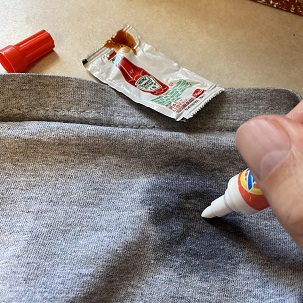
Hope I can open this ketchup packet.

Whoops. Hope Tide-To-Go works on this.

Hope no one sees me dressed like this.

Hope I don’t have to go upstairs again.

Hope my appointment is in the morning.

Hope this isn’t fattening (Who am I kidding).

Hope this isn’t another robocall.

I can’t read this — hope I can find my cheaters.

Hope this ends before I nod-zzzzzzzzzzzz

Hope YOU have a tremendous 2022!

Doug writes goofy things about MS and other stuff on his humor blog at myoddsock.com.

Intentional and Collaborative Planning

By Stacie Prada

It’s typical to ask “What do you want to do today?” I’ve had richer conversations and better success asking, “What are your goals for the day? What would make today successful for you?”

It helps shift the conversation from specific decisions to a discussion about attributes that matter to each person. It might feel a little goofy or too structured, but I promise it contributes to relationships of respect and understanding with people who mean well and care. 

During the holiday season, it’s even more worthwhile to be clear about what matters to each of us. Holidays bring out heightened emotions and expectations for how to celebrate. Keeping traditions and doing what we’ve always done isn’t always possible or wise anymore. Whatever the reason, it’s worth introspection and discussion to adapt.

Collaborative Planning

What are your goals for the day, the weekend, the month or the holiday season? 

I try to ask these questions of myself and those I’ll spend time with.  When I know what I need to get done, what I want to do and what the minimum is that I hope to do, I can be realistic about what will meet my needs.

When I share my answer with others, they help me make it happen. When they share with me what they’d like, I factor their needs and preferences into plans. Usually our desires are compatible, and meeting everyone’s needs is doable. When we’re on the same team and plan collaboratively, we often come up with better and more fulfilling plans than if we’d left decision-making to one person.

Everyone has different desires, and each decision has different implications. A solution to one barrier might create other problems or eliminate something important to someone else. 

What’s important? What’s the essence of what would make it successful?

Knowing this helps shape decision making. We can collaborate on plans and understand what we’re trying to accomplish for each person involved.

If you don’t know what you want, you’re unlikely to get it or know you got it. If you don’t share what you want, you’re leaving everyone guessing and unlikely to make decisions that will meet your needs.

I have a friend who shared they get frustrated when they plan holidays and vacations with everyone in mind, but no one asks what they want. They understandably feel unappreciated. It’s not easy advocating for our needs, and often friends and family forget to ask. Proactively asking everyone what they want or need allows everyone to share in the conversation and decision-making. It also helps make decisions when things don’t go as planned. Everyone can contribute to problem-solving, because they know in advance what attributes are important to each person.

There are some who might not cooperate. Anyone sabotaging plans or dismissing another’s needs must be dealt with or avoided. If that’s an issue, find an ally who can reinforce or champion your wishes along with those of the rest of the people in the group. If that’s not possible, one-on-one counseling may be needed to navigate the specific situation or relationship.

In good relationships, sharing needs and limitations leads partners, family and friends to advocate for each other. Being self-aware, forthcoming and curious cultivates healthy bonds and boundaries. Being intentional with planning and collaborating with everyone involved is an opportunity to learn about each other, accommodate needs and appreciate our uniqueness.

*Stacie Prada was diagnosed with RRMS in 2008 just shy of 38 years old. Her blog, “Keep Doing What You’re Doing” is a compilation of inspiration, exploration, and practical tips for living with Multiple Sclerosis while living a full, productive, and healthy life with a positive perspective. It includes musings on things that help her adapt, cope and rejoice in this adventure on earth. Please visit her at http://stacieprada.blogspot.com/
Blame the Disease, Not the Person

By Stacie Prada

Question: What was most and least helpful when you were first diagnosed?

Answer: The people. Collectively, they were the most helpful. Individually, some were the most and some were the least helpful.

Blame the disease, not the person

The people who listened, asked questions and validated my feelings helped me the most with my multiple sclerosis diagnosis. Answering sincere questions helped me analyze what was true at that time and what was fear for the future. Thinking through the issues and explaining my experience helped separate what I could influence from what I couldn’t. They offered suggestions while respecting my opinions and decisions. The paid support people who helped me immensely included my medical support team: primary care provider, counselor, neurologist, and physical therapist. The unpaid support team included family, friends, coworkers, online connections, and the local MS self-help group.

Those who told me what I needed to do or why I shouldn’t worry were naïve and ill-informed. They would prescribe treatments without knowing what caused my symptoms or what my symptoms even were. They’d tell me I’d be fine since someone they know who has MS is fine. They assured me I’d stay healthy to appease their own fears, not mine. They included people in all of the categories listed above who helped me immensely. A person’s profession or relation doesn’t automatically place them in the category of helping or hindering. How they behave and interact does.

The people who judged me harshly for how my health was impacting them caused the most stress, guilt and pain. I was criticized for being less attentive in my relationships and for letting MS be my focus. I believed it was a personal fault that I was burdening others. 

I genuinely thought I should be able to deal with my health privately and keep doing everything I’d been doing for others. I wanted to be strong and prevent the people in my life from being affected by my diagnosis and documented chronic illness. 

MS symptoms and exacerbations made me unable to meet the expectations I had for myself and others had for me. It helped me realize the expectations had always been unreasonable. I learned I’d never be able to be healthy physically and emotionally if I kept trying to meet unreasonable expectations.

I realized I can’t do this alone, and I shouldn’t. 

The people who validated that I needed to address my health and accepted things would change – they helped me the most.

The people who were angry, hurt, blamed and resented me for their unhappiness – they helped force me to realize I didn’t need to keep working toward the life I’d been building, and I probably couldn’t if I kept trying. In a painful way, they helped me open my future to more possibilities. Changing things wasn’t failure, it was survival.

Survival requires self-care. To people who are used to benefiting from an unhealthy relationship dynamic, other people practicing self-care feels like neglect. It’s good that terms are available now to describe manipulative behaviors. Consider (and look them up if unfamiliar) gaslighting, shaming, isolating, catastrophizing, guilt-tripping, silent treatment, insults disguised as jokes, and jealousy are just some of them. Hopefully discussions and education on unhealthy relationship tactics help people recognize them instead of feeling responsible for other people’s feelings and accusations.

It helped the most when I and the people in my life accepted my health as a fact of my life and worked together to make the most of my abilities and limitations. They watch out for me, help me reflect, know my health may inconvenience them at times and always make it clear they are on my team. 

We are united in our approach: Blame the disease, not the person. 

*Stacie Prada was diagnosed with RRMS in 2008 just shy of 38 years old.  Her blog, “Keep Doing What You’re Doing” is a compilation of inspiration, exploration, and practical tips for living with Multiple Sclerosis while living a full, productive, and healthy life with a positive perspective. It includes musings on things that help her adapt, cope and rejoice in this adventure on earth. Please visit her at http://stacieprada.blogspot.com/