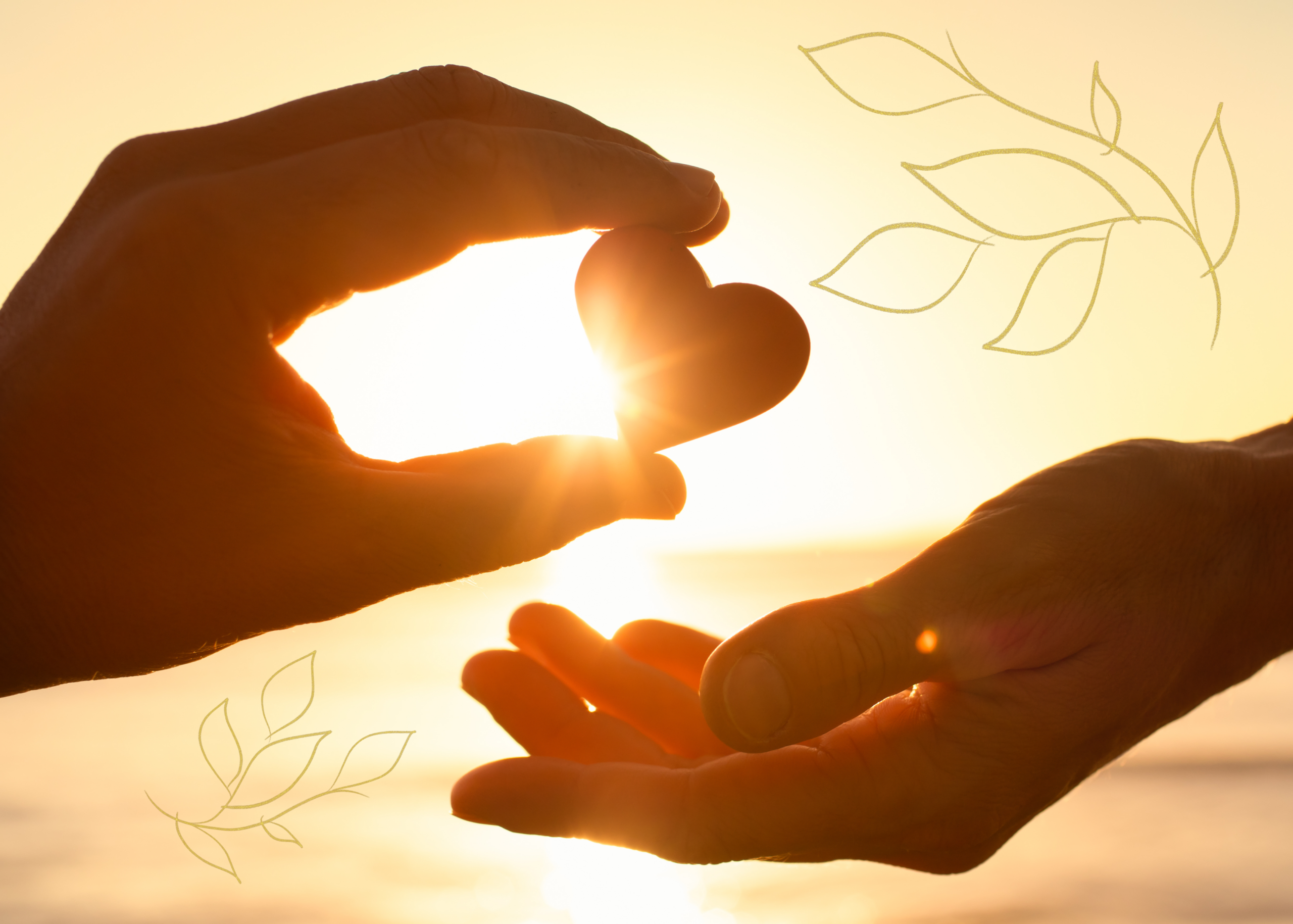
Love, like any living thing, needs nourishment. Just as plants require water, sunlight, and care to grow, our relationships – both with ourselves and those around us – thrive when we invest time, attention and kindness. The way we treat ourselves often reflects in how we show up for others, and vice versa. When we nurture love within, it naturally extends outward, strengthening our bonds with the people with care about.
Continue readingCategory Archives: Community & Relationships
Community Views: What Society Believes About MS and Relationships
When MultipleSclerosis.net contributor Anita Williams wrote “Beggars Can Be Choosy” about what society believes about people living with the diagnosis, she hit a nerve. She brought to light many of the negative stereotypes that are often not openly discussed.
After Williams’ article was shared to the MultipleSclerosis.net Facebook page, it sparked a response from nearly 150 community members. Here is what was shared.
Having MS does not make someone broken
Too often, people with MS can believe the lie that having an illness makes them hard to love or accept. There is a societal belief that having a disease makes someone “broken” or somehow “less than.” This is a horrible lie.
When it comes to relationships, true love is unconditional, not transactional. Loving someone means loving who they are as a person, not loving how many chores they can do, meals they can make, or how much they can do for someone else. That kind of transactional love is not healthy.
“This is exactly how I was made to feel. It is now 4 years after my divorce, and I now realize that I am a good person and not broken. I will be fine and, God willing, I will find the person who can love me as I am. My ex is the one with the problem, not me. He will not ever find the perfection he is looking for because nobody is perfect. He only thinks he is.”
“Two days before I married, I was diagnosed with multiple sclerosis. The marriage ended, but not due to my illness. During our marriage, I often heard, ‘Wow, and he still married you?’ Yes, he did.”

Others believe someone with MS is “lucky” to be married
So many community members shared that they, like the author, had been told that they are lucky to have a partner. This is never a kind thing for someone to say, nor is it true. Having an illness does not make someone less loveable. Some community members shared that they do feel lucky to have a partner. But truly, everyone who has a partner is blessed to have found love.
“Ugh, it is true. I do not know how many times I have been called ‘lucky’ to have my partner. I wonder if anyone has ever told him he was lucky to have me. It is doubtful.”
Both partners are lucky to have one another
In a true partnership, both people will feel lucky to have one another. Each person brings their own unique gifts. Both people will give to one another, and both will receive – that is what partnership means.
Many in the community shared that they have no doubts about the value that they bring to a relationship. They know that having MS does not limit their self-worth. They also see that their partner is lucky to be with them.
“My husband is wonderfully supportive, as I am to him. A couple of years ago, he nearly died from sepsis and had to have his leg amputated. It was a dreadful time, and he needed a lot of nursing, which, at first, was hard with the MS. But we muddled through together, and I think we are even closer now.”
“I am lucky to have my partner, and we are lucky to have each other. We take care of each other.”
“In reality, I know I am lucky to have my husband with me, and he knows he is lucky to have me in his life. It does not really matter what anyone else thinks or says.”
“Personally, I think he is bloody lucky to have me!”
“Oh, way to go! I was married over 20 years before I was diagnosed, but I married a man with character, and he knows he is lucky to have me. I am not a victim. MS, nor any other disease, will never cheapen my value.”
Thank you to everyone who shared. We are grateful to hear from so many community members about your personal experiences.
Good Confidants Can Handle the Tough Stuff
By Stacie Prada
Our relationships affect our health, and our health affects our relationships. Our health and our relationships evolve over time as each person ages and life chapters change. These are simple and obvious facts, but I find them to be something I need to remind myself periodically.
Living with a chronic and progressive illness like Multiple Sclerosis complicates the issues to tackle and the dynamics to navigate relationships. As my body changes, my focus always shifts inward. Is this symptom new and temporary, or is it a small indication of worse things to come? What do I need to do differently now, and what might it signal for my future?
These are important questions to consider. Identifying symptoms, possible treatments and available resources are crucial for navigating the physical aspects of chronic and progressive diseases like MS.
In these times, I try to stay logical and pragmatic. I try not to overreact. I try to work through my fears and frustrations in a healthy way that doesn’t impact anyone else. They don’t ask me to keep it to myself, but it’s my natural preference. Unfortunately, the agitation and worry usually seep out, and those close to me sense it.

It takes a lot of self-awareness and acceptance to disclose when my body isn’t working well. Usually, I’m still trying to get a handle on what it is and whether it’s significant or not. I’m still trying to analyze and monitor the changes. I often am not yet ready to share, because I’m hoping things might improve and there might not be anything to share. This means those close to me experience the consequences of my changing health before I even realize I’m stressed and irritable.
My confidants have excellent skills for showing curiosity and support while not pressuring me. Sometimes unknowingly, they help me manage my feelings, my fears and my frustrations. They hear me, believe me, don’t compete with me, and share themselves with me. I see their grace when I deflect or shut down an inquiry. These are the people to keep close, because they’re willing and able to help me. When I see them hesitate or gently back off, it’s my signal that I should share what’s bothering me.
Yet, I still hold back. While it’s silly to think saying things out loud will make them worse, it’s exactly how I feel. If I share that my legs hurt more and my coordination is worse, it means my fears of becoming disabled are warranted. It means I’m becoming disabled.
I’m seeing disability with MS can be a slow, gradual and very invisible transition. It appears to me that I will be greatly affected by my disease before anyone sees me with a mobility aid.
I’m going through this life with MS, and the people close to me are going through this life with MS with me. Some made my life harder, and I’m fortunate to no longer rely on them. Others have proven to be healthy and respectful, and they are my cherished relationships. They check in, they ask how I’m doing, and they back off when they see I’m not up for saying more. It’s not until I open up and share the invisible changes I’m experiencing that they can really go through this with me in a way that helps me cope.
Having a body slowly and progressively deteriorate is an isolating feeling. It takes effort to explain and not complain. I get sick of living with MS, and I get sick of being tired of it. I want to be low maintenance and easygoing, but this disease is one that requires constant coddling and accommodations for my body’s needs. It takes a lot of time and effort to do the physical tasks that are needed to manage my MS symptoms, and it takes tremendous effort to challenge the negative thoughts that come from having a chronic illness.
I haven’t found the secret to skipping the irritable phase. I’ll notice I’m grouchy, and I try to override the temptation to lash out. Sometimes I do well. I keep my mouth shut and go for a walk or do yoga. Sometimes I reveal my bad mood in my tone or curt responses. It’s moments like these when I don’t feel like I’m being as nice as I’d like that I hope to avoid or get through quickly. Often the best I can do is give myself a timeout and tell those around me that it’s not them. My goal is to be able to feel pain without lashing out and seek connection to help get me through the feelings of uncertainty and frustration.
Once when I was going through an especially difficult time, a friend wrote in the sympathy card, “We’re hurting with you.” It hit the right nerve, and tears along with a sob came quickly. I was feeling very alone, and having someone succinctly address it allowed for a cathartic feeling of connection. I know the antidote to feeling powerless and alone is sharing with those close to me. It doesn’t fix my problems, but it lightens the emotional load I’m carrying.
If I can be truthful and forthcoming with the people who have my back, and if I can be a source of support for their challenges, I think we’ll all fare well. The best relationships can handle the tough stuff.
*Stacie Prada was diagnosed with RRMS in 2008 just shy of 38 years old. Her blog, “Keep Doing What You’re Doing” is a compilation of inspiration, exploration, and practical tips for living with Multiple Sclerosis while living a full, productive, and healthy life with a positive perspective. It includes musings on things that help her adapt, cope and rejoice in this adventure on earth. Please visit her at http://stacieprada.blogspot.com/
The Importance of Valuable Relationships

Relationships. Just how important are valuable relationships? Do they really matter? In the current state of the world, in the midst of a global pandemic, are relationships still relevant? Short Answer? Absolutely!
Relationships are important because they bridge the connection between people. They are the essence of humanity and are vital to the mental and emotional health behind the human experience. It is the connection between two individuals that can lead to happiness and success in a person’s life. This very reason is why it is so important to have valuable relationships.
Whether it be a relationship with a parent, family member, or friend, relationships are important because they satisfy the human need to connect. Important relationships also provide an additional perspective to your own thoughts and can help get you out of emotional slumps. I’m thankful that throughout everything I’ve encountered in my life, I’ve had valuable relationships to help keep me encouraged and moving forward.
Valuable relationships can also give you that much needed “second wind.”
Friends, there might be times when you want to give up. There might be times when you can’t see a solution to your current situation. In those discouraging moments, reach out to a friend or a loved one for an additional perspective. It is in those additional perspectives that you can find great hope, strength, and encouragement to keep pushing forward. It is in those additional perspectives that you will find your “second wind.”
Valuable relationships are super important in more ways than we realize, and holding on to them is a must. Friends, I want to encourage you to stay connected with those valuable relationships in your life. Reach out and stay connected with your loved ones. You will find yourself much happier, and your mind and body will thank you.
Sisterly Love
With Valentine’s Day around the corner, this time of year usually makes us think of candy hearts and bouquets of flowers and mushy love songs. But aside from the romantic relationships that usually dominate this holiday, it’s also a good time to think of the other bonds that we value and find important in life. Our connections with others are something to treasure now more than ever, so it’s nice to think of the other relationships that mean so much too. For me, I value the relationship that I am fortunate to have with my sister.
Growing up we bickered and fought just like typical siblings do. We had times where we didn’t like each other but we still loved each other cause ‘we had to’ kind of thing. But as we grew older, we started to appreciate who the other was and learned more about them. Now we look back and realize how lucky we were to have one another. Our other siblings were close in age but older, and while we were all close and grateful for that, my sister and I formed a bond that has strengthened to this day.
My sister is a wonderful mother and talks about having more children because she wants her son to have a sibling with whom he can have the same type of bond that her and I share. As our family has sadly lessened over the years, we’ve grown increasingly grateful for those we are still blessed to have, and I am thankful for her every day. She listens without judgement, loves unconditionally, and knows my quirks, fears and hopes. My sister is always there, and I would feel lost without her. She’s a fun reminder of our childhood and is someone that I can reminisce with to share memories of family and good times.
If you have a relationship in your life that you value and cherish, be sure to let that person know it. You don’t have to say it every day, but once in a while let them know that they are important to you and what your connection means. It’s nice to share this sentiment with the people in your life who matter the most.
Nurturing Relationships After Holiday Gatherings
By Stacie Prada
Family relationships are hard. I look back at decades of immediate and extended family holiday gatherings, and I notice what has changed and what seems like a given. Long-held disconnects or resentments lie beneath the surface and feel ready to erupt at any moment.
Consider as mere mortals, it’s rare to be perfect in these moments. I’ve left family gatherings spending huge amounts of time thinking about Continue reading
The People Who Surround Me: Those I Keep and Seek
By Stacie Prada
As I age, I’m getting more intentional about who I spend time with and how I shape interactions. We can’t always completely avoid people who drain us, but we can shift how we approach our interactions. We can’t always spend enough time with the people we love, but we can shape our relationships to maximize our joy and connection. A lot of our daily lives involve acquaintances who with a small amount of attention can become friends. Our friends and family won’t always have the skills or perspective to meet our needs, but we can find circles of friends who will fill the gaps.
People who drain me: If I can Continue reading
Relationships and MS
Relationships can be hard work. They require unwavering amounts of attention, maintenance and commitment. And though they can come in all different shapes and sizes, all bonds have their share of ups and downs and all-arounds that can drive people crazy. It’s the process of weeding out the beneficial, encouraging relationships from the negative, toxic kinds that is so important. Yes, relationships can be hard work. But making sure you’re putting the effort into the ones that are rewarding and worth your time is the difference.
You’ll find that some relationships Continue reading
Dating and MS: Loving and Risking Heartache
By Stacie Prada
I used to feel such relief that I was married and didn’t need to be out in the dating world. It sounded horrible, and I enjoyed having my relationship set with the expectation there’d be no divorce. Then I started having health issues and was diagnosed with multiple sclerosis after 15 years of marriage.
When a married person is diagnosed with MS, the rate of divorce is about the same as the general population, but the gender disparity is enormous. A study by the Fred Hutchinson Cancer Research Center1 found that Continue reading
Relationships and Multiple Sclerosis
By Ashley Ringstaff
Living with multiple sclerosis is life changing for the person diagnosed, but it is also a change for our loved ones as well. I often tell people that my loved ones “Live with MS” also, because it is now a part of their lives for the long haul. It’s a learning experience and modification time for all involved. Things change when we least expect it as well, that will need modifications along the way. Meaning, if we relapse, new symptoms occur, etc.
I can honestly say that when I was first diagnosed that I pushed people away, especially my husband. I was only 22 at the time of diagnosis, and I felt like I didn’t want to make him deal with this at such a young age as well. Luckily for me, he is very stubborn and didn’t allow me to push him away, and for that I’m grateful.
There were people close to me at the time of diagnosis, which I no longer associate with. It was not my choice to no longer be friends with them, but things happen. It hurt, to have people abandon me at such a crazy time in my life. I understand now that not everyone can “handle” multiple sclerosis, even indirectly.
The state of mind I had when I was first diagnosed – I was very depressed, as well as angry. I couldn’t even tell you which emotion I was feeling more of at that time. They were pretty much dead even, but one would be more prominent at times, depending on the situation.
Many people, including myself, will tell you that you find out whom your true friends are when faced with such a life-changing event. I’ve made new friends since my diagnosis, and I have come to tell people straight off the bat that there will be times that I have to cancel last minute on plans, or I can’t give a 100% answer on if I can go to an event or not, because it all depends on other factors. Is the event outside, is it very hot outside, etc.
If you’re reading this, and you are in a relationship with someone that has MS, please be patient, especially if they are newly diagnosed. For those of you that are friends with someone that has MS, in a relationship with them, related to them, etc. Please be patient in general. Also, take the time to try and understand what we’re going through as best as you can. It makes it easier for us to vent and talk to you, when you have some sort of knowledge about multiple sclerosis, and how it affects us on a daily basis.
I have a friend that I don’t get to see as often as we would like, but she still texts me or calls me just checking on me… seeing how I’m doing… Do I need anything? I can’t even being to explain to you how much that means to me, and to many others living with MS. Just having someone there for us, it can mean the world.
For those of you that have been diagnosed with Multiple Sclerosis, you are not alone. You have so many of us out here in the MS community that will be there for you and talk to you, and just let you vent… we may need to vent in return. I’ve had so many people message me on social media, and are so glad that they have someone to talk to about this illness, that “get’s it”. Also, know that those around you might want to be there for you, but they just don’t know how. You need to let them know what they can do help you out, or even suggest some things they can read, etc. I know it’s easy to isolate ourselves, to avoid people leaving us in the long run… but then you have no one there for you in the end.
There are so many resources out there that offer ways for you to build relationships with others living with MS in your local community, online, etc. Here is a listing of the organizations apart of the MS Coalition, click here. Here is another listing as well, click here.
Whatever you are feeling and/or going through, it is never ‘wrong’. You have the right to feel certain ways, and we can’t control the way MS affects each and every one of us. We are all affected differently, but we are all in this together. I can honestly tell you that many people that I’ve spoken to with Multiple Sclerosis, want to hand out the “MS &Things People Should NOT Say” list to their loved ones, and other articles I’ve written on MultipleSclerosis.net. There is also a list my good friends and fellow writer, Cathy Chester wrote called, “What People SHOULD Say to Someone Living with Multiple Sclerosis.” This is a good article to read for the friends and loved ones of someone living with MS.
I hope you enjoyed the article, and please feel free to reach out to me on my Facebook page if you ever just need to chat.
*Ashley is a 29 year old from Central Texas, that was diagnosed with RRMS in August 2010, at the age of 22. She is a mom of two boys and loves to read & write in her spare time. Ashley is a blogger for MultipleSclerosis.net, you can view her blogs here. Her writing is mostly written with a sense of humor and personal experiences.