Ask the Expert: Heat Sensitivity

Featuring Barry A. Hendin, MD 

MSAA’s Chief Medical Officer 

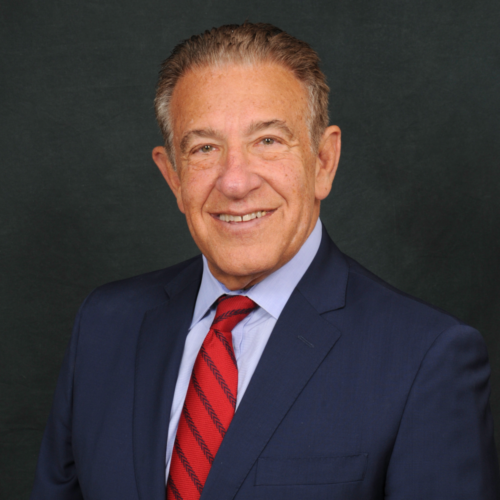
Headshot of doctor Barry Hendin, chief medical officer for MSAA
Barry Hendin, MD

Question: What are the symptoms of heat sensitivity in MS, and how is it best treated?

Answer: Heat sensitivity, also known as Uhthoff’s Phenomenon, describes an increase in MS symptomatology caused by overheating. This could be due to external influences, when a person with multiple sclerosis is in an excessively hot environment. Alternatively, this can relate to an internal increase in body temperature due to exercise or infection with fever. Sometimes, of course, it’s a combination of the two when people are exercising in an overheated environment.

Continue reading

Speaking Up Is Self Care

Speaking up. Standing up for myself. These are all things that you learn as you grow and mature in life. Advocating for my health though, piece of cake. I know my body like no one else. I understand how my body responds, reacts, and refuses. 

When I think of self-advocating for myself, I also think of speaking up not just in the medical sense, but also when something, or someone is not filling my cup. I think back on all of the instances in my younger adult life, and get angry with myself for not speaking up to say “no, my body cannot afford to go out tonight.” Or simply say something along the lines of “I’m sorry you don’t understand why I put my body and my health first, but it’s necessary for me to stay healthy.” 

Continue reading

Self-Advocacy: Challenges, Tips, Mentors and Allies

By Stacie Prada

Self-advocacy is hard work. We’re likely advocating for ourselves in tiny ways all the time, and we don’t notice when there’s little to no resistance.  Frustration grows when we meet opposition and live with pain and unmet needs.

Barriers to self-advocating: Sometimes, I don’t know what I need, I’m unsure of what resources exist that could help, or I’m not being heard by those who could help me. Even if they want to help, they might not know how.

Continue reading

El arte de pedir lo que necesita

Me he dado cuenta de que aprender a pedir lo que necesito es todo un arte. Mientras que para algunas personas es algo que resulta natural, a otros les resulta difícil expresarlo con palabras. Abogar por nosotros mismos requiere autoconciencia, claridad y práctica, y afortunadamente estas habilidades se pueden aprender y fortalecer con el tiempo.

Por naturaleza, los seres humanos buscamos la conexión humana y el sentido de comunidad. Abogar por nosotros mismos y pedir lo que necesitamos puede parecer riesgoso porque conlleva el miedo de ser rechazados, descartados o vistos como demasiado demandantes o difíciles. Sin embargo, todos tenemos una necesidad innata de sentirnos escuchados, validados y comprendidos.

Continue reading

The Art of Asking for What You Need

I’ve realized that learning to ask for what I need is an art form. While this may come naturally to some, others may find it difficult to put into words. Advocating for ourselves takes self-awareness, clarity, and practice — but the good news is that these skills can be learned and strengthened over time.

At our core, humans are wired for connection and belonging. Advocating for ourselves and asking for what we need can feel risky because it carries the fear of being rejected, dismissed, or seen as “too much,” “too needy,” or “difficult.” And yet, we all have an innate need to feel heard, validated, and understood.

Continue reading

Power of Empowerment

There are a lot of uncertainties one must face while battling MS, and its symptoms vary widely among individuals. For newly diagnosed individuals, this can be a scary and unsettling journey without knowing what to expect down the road. Below are a few things you can suggest to someone who has been recently diagnosed with MS:

Continue reading

When It Comes Time to Pay the MS Tax

We all know the feeling. That surge of energy, the desire to participate, to feel “normal” for a while. Whether it’s attending a family gathering, tackling a long-awaited household project, or simply enjoying a few hours out with friends, those with multiple sclerosis (MS) often seize these moments with both hands. 

But as many in our community understand all too well, this activity often comes with a significant price: the dreaded “MS tax.” 

Here is what our community members had to say about how they deal with physical and mental exhaustion after overexerting themselves.

Continue reading

Strawberry Basil Bruschetta

Celebrate the sweetness of the season with this Strawberry Basil Bruschetta—a bright, flavorful dish that turns simple ingredients into something special. Perfect for July 4th gatherings, casual picnics, or anytime you want a light bite with a summery twist, this recipe pairs juicy seasonal strawberries with fresh basil and a hint of balsamic. It’s easy to prepare, budget-friendly, and elegant enough to impress, whether served as an appetizer, snack, or refreshing dessert.

Continue reading

Reclaim Your Power

Being diagnosed with a rare autoimmune disorder comes with many challenges- one of the most common and often more difficult is learning to become your own advocate. More often than not, the people and healthcare professionals I encounter are not familiar with my condition, which frequently means they do not know the symptoms that accompany the diagnosis and the treatment options that work best for me. This is when speaking up for myself becomes vital.

Continue reading

The Power of Being Your Own Advocate 

By Samuel Fitch

The word advocate means “a person who publicly supports or recommends a particular cause or policy.” But when it comes to self-advocacy, it means something even more personal—speaking up for yourself when no one else can. 

As I sit down to write this, I find myself in a unique place. On one hand, I’m celebrating a beautiful milestone: my daughter graduated from ministry school this week. On the other hand, I feel completely worn out. We spent 24 of the 72 hours on the road just getting to and from her graduation, and the exhaustion has caught up with me. Add in the personal demands of life, a career that requires a lot of me, and countless other responsibilities, and it’s no wonder I’m feeling drained. 

But here’s what I’ve learned: it’s OK to speak up for yourself. It’s OK to set boundaries with your time. It’s OK to give yourself permission to rest. That is self-advocacy. 

And for those of us living with something like MS, self-advocacy isn’t just helpful—it’s essential. After a diagnosis, the floodgates open. Well-meaning friends and family start offering opinions, articles, and advice. But being your own advocate means having confidence in the path you’ve chosen with your medical team. Even in the early days, when things aren’t going smoothly or symptoms don’t seem to improve, you have to trust your team—and yourself. 

Being a self-advocate means standing firm in the face of uncertainty. It means honoring your own voice even when your body feels weak. It means saying, “I’m not OK right now,” and knowing that’s a powerful, healthy thing to do. 

As I look at the picture of my wife and our four kids on the wall, I’m reminded how blessed I am to have a support system. But even with that support, I’ve learned to listen to my body when it says, “Enough.” And in those moments, I have to speak up—not just for my health, but for my future. 

Because sometimes, the strongest thing you can do… is rest. 

About Sam:

Sam Fitch is a financial advisor based in Jamestown, New York, where he helps individuals and families build stronger financial futures through planning focused on cash flow, protection, and long-term goals. Before entering financial services, he spent 25 years working in his family’s restaurant business, which helped shape his strong connection to community and service.

Sam also lives with multiple sclerosis and is passionate about supporting others navigating similar challenges. Through his writing and advocacy work, he hopes to encourage people living with MS to pursue strength, resilience, and a meaningful life despite the obstacles the disease can bring. He is a husband, father of four, and active supporter of the MS community.