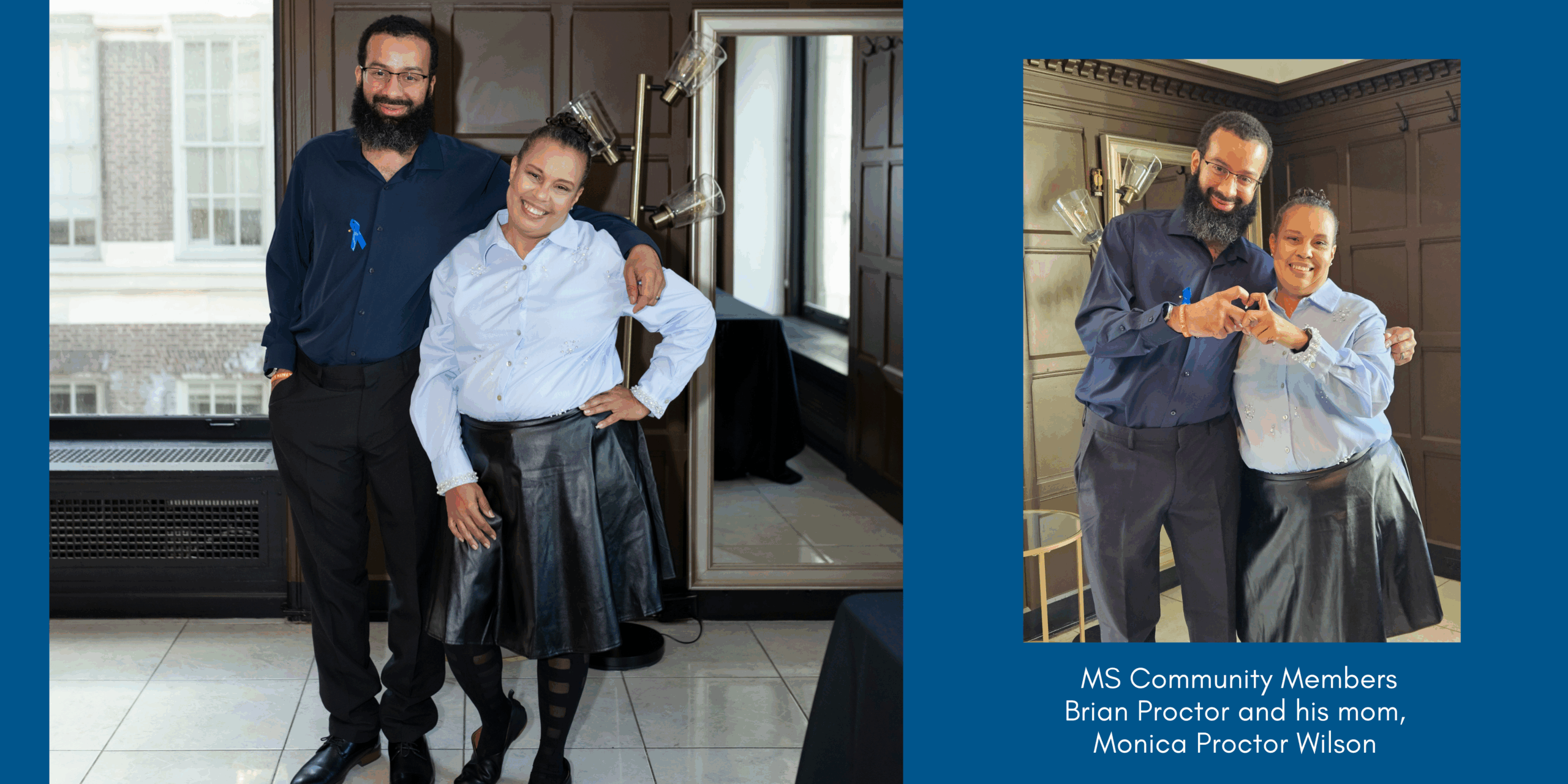
Building your Fortress

An individual going through a chronic illness like MS may be hit with a multitude of emotions like loneliness, helplessness, confusion, anguish, anger, and sadness at different points in time. The uncertainty associated with MS can be immensely stressful. Having a support system, whether it be friends, family, coworkers, or therapists, can help you navigate through the toughest times. Reaching out for help from your support network is not a sign of weakness. Rather, it shows that you have a strong support system to back you up in hard times. Below are some tips to build a strong and thriving safety net:

Continue reading
Share Button

Creating Your Safety Net: Living with MS

Life with MS can be full of ups and downs. Some days you feel strong and independent – others, you may need a little extra support. That’s completely normal. No one is meant to carry everything alone – MS or not.

Having a reliable support system – a personal safety net – can make daily challenges more manageable and help you feel more grounded, emotionally and physically. Whether you’re newly diagnosed or years into your MS journey, it’s never too late to build or strengthen that circle of support.

Continue reading
Share Button

Enhance Your Safety Net with My MSAA Community

Living with multiple sclerosis can bring about a number of uncertainties – from navigating symptom and treatment options to dealing with emotional and lifestyle changes. While every journey with MS is unique, one thing is universal: no one should have to face MS alone. This is why the Multiple Sclerosis Association of America (MSAA) created My MSAA Community.

Continue reading
Share Button

Proud Memories

By Bonnie Lynn Ellison

May is a good time to reflect on myself, and what my younger self would be proud of. When I was young, I thought life was a rodeo! I competed in the National Little Britches Rodeo from 8 to 18 years old, and was proud of my ribbons, buckles, and trophies! I learned, if you got thrown off, you got back on the horse!

When I was young, I also played my guitar and sang in talent shows, from 7th grade through high school. In college, I performed with the FAB Company. We toured nationally in the early 1970’s, recorded four albums, and were contracted with the major international talent agency, William Morris. I’m proud that we wrote our own original music, songs, and comedy. We did concerts! I thought I was Taylor Swift!

I fell in love, got married, and two years later, I was diagnosed with multiple sclerosis. I was 25. It affected me like a stroke, on the right side of my body. I had never heard of this disease, so it was like an old rodeo injury to me. It took about three years to recover enough to write, sing, and perform again. And there were no assurances that it wouldn’t return. I had always been athletic and healthy. It was shocking for me, and a struggle.

Continue reading
Share Button

Being An MS Warrior

Being diagnosed with MS can be disheartening news for many since the road ahead can be so scary and unpredictable. If left undiagnosed, it can lead to severe disability over time.

It is of utmost importance that you schedule your appointments with your neurologists and other care providers regularly so that they can help with managing your symptoms and keeping your MS at bay. The high costs associated with the treatment make medical coverage crucial as over time, MS may unfortunately place a financial strain on individuals and families. Fortunately, there are organizations like the Multiple Sclerosis Association of America (MSAA) can direct you to valuable resources while navigating the bumps along the way.

Continue reading
Share Button

A Letter to a Friend: So You’ve Just been Diagnosed with MS…

Dear Friend,

I’ve been thinking about you so much since you shared your recent diagnosis of MS. I know this probably feels like a lot – like the ground has shifted under your feet – and I wish I could be there in person to give you the biggest hug. Since I can’t, I wanted to write you this letter instead.

I don’t have all the answers (who does?), but I want to share a few things that I’ve come to learn about MS. Just remember, you are not alone. Not now, not ever. I am here for you, and so are your closest friends and family.

Continue reading
Share Button

A Love Letter to My Younger Self

By: Emily Carlin

Understanding life with a chronic disease diagnosis is a long-term experience. For me, it took years to come to terms with the fact that I have MS. The journey was not easy but looking back I am proud of myself for how I handled that situation so early in my adulthood. 

For some background, I was 23 when I was diagnosed with MS. Unfortunately, I am very familiar with how this condition can impact your life, as some of my family members have lived with MS for many years. To write this piece, I’m going to take you on a little journey with me. Join me as I take you back to the time when I was first diagnosed as I pretend to take myself out for coffee as the 35-year-old woman, wife, and mother I am now.

I asked my younger self out to coffee. She showed up with glowing skin, long hair, vibrant, and full of life. She was also well rested (darn, I was jealous of that, being I’m now a mom of two toddlers). She asked me how my day was going with a cheerful smile. I paused for a second, I looked right in her eyes and told her she was beautiful before I answered. I softly smiled, and told her my day was going well, but I had some things I’d like to share with her.

Continue reading
Share Button

You Got This!

Receiving a multiple sclerosis (MS) diagnosis can be overwhelming, but it’s also the beginning of a journey where you can take charge of your health and future. While MS comes with uncertainties, empowering yourself with knowledge and a proactive mindset can make a world of difference. Start by educating yourself about MS through the Multiple Sclerosis Association of America (MSAA). Understanding your diagnosis helps you make informed decisions about treatment, symptom management, and lifestyle changes.

Continue reading
Share Button

Trouble Swallowing Food or Drinks

Many symptoms of multiple sclerosis (MS) are challenging to endure. For example, having difficulty swallowing is a common issue with MS. It can prevent any pleasure or comfort when eating a meal. Many people with MS report being discouraged from eating at all due to the severe pain and terror it can cause.

We reached out to the MS community to learn more. We asked, “Do you ever feel like your food gets stuck in your throat or experience other difficulties when it comes to swallowing food or drinks?”

We received 280 responses to our prompt! The MS community was moved to share their symptoms.

Continue reading
Share Button

Seeking Hope

By: Stacie Prada

Finding my new normal was my initial goal when I was diagnosed with multiple sclerosis. I didn’t know what I’d need to know to live well with MS, but I held faith that I would learn what I could when I was ready. My hope was to live as well as possible with MS. Both faith and hope are deeply reliant on me to do what I can. 

The fact is I’ve had periods of holding it together, phases hoping to come out of a lot of MS symptoms, and moments where I feel like I’m rocking this life and doing fabulously.

Early in my diagnosis, I sought out every resource I could find. I read all the books related to MS in the local library, I joined the local MS Self-Help group, and I followed my neurologist’s advice. I monitored my symptoms and tried to make sense of a confusing and inconsistent illness. I searched the internet to learn all I could about MS and what helps. My health was a project to solve, and I treated it like a second full-time job. The urgency to figure out what could help was stressful, but I think it was a necessary phase of adjusting to life with a chronic illness. All of these efforts helped me become more hopeful.

Scientific studies conclude those of us living with chronic illness have a better quality of life when we have hope. When we’re optimistic, we believe our efforts can make a difference. Having hope helps combat stress and anxiety.

When lacking hope or feeling pessimistic, we’re less likely to think our efforts matter. Either way, what we believe matters for our mental and physical health when dealing with adversity.  

We can’t fully control or count on a constant level of hope. Accepting our highs and lows as normal can help ease some of the stress of living with MS. Monitoring our mood and stress level can help us notice when we’re feeling less hopeful. What we need in those times differs for each of us, and they vary depending on what’s challenging us at that moment.

What do I need, and what might help? Sometimes I need to research the symptoms that are challenging me, and others I need to talk to someone who will listen. Some moments benefit from taking a breath, stretching, and looking inward. Other moments are best served by looking outward and thinking about something other than myself. Each moment’s feeling is unique, and each needs its own plan of action. My not-so-new normal is only consistent for seeking hope and accepting the path is always changing.

*Stacie Prada was diagnosed with RRMS in 2008 just shy of 38 years old.  Her blog, “Keep Doing What You’re Doing” is a compilation of inspiration, exploration, and practical tips for living with Multiple Sclerosis while living a full, productive, and healthy life with a positive perspective. It includes musings on things that help her adapt, cope and enjoy in this adventure on earth. Please visit her at http://stacieprada.blogspot.com/

Share Button