When living with a chronic illness like multiple sclerosis, building a community for yourself of people who truly get it is incredibly valuable. Having a support network in your life of people who are there for you in easy times and hard can make all the difference. A support network can be made up of neighbors, friends, and family members you see regularly. And, with the variety of digital options, your support network can easily be found in virtual forums, like MSAA’s My MSAA Community.
For the past 15 years, members of my community have routinely organized vision board parties toward the end of the year or at the start of the new year, with an emphasis on goal setting. Personally, I have often felt uncomfortable during this period, as traditional goal setting has never resonated with me. I tend to set ambitious goals but frequently find myself unable to achieve them, despite starting with clear intentions. This recurring pattern leads me to believe that perhaps my goals are often unrealistic.
I created a vision board years ago that included images of women doing yoga poses I couldn’t do. I attended yoga classes weekly, and I loved how it combined calming breathwork with some of the gymnastics, athleticism, and flexibility that my multiple sclerosis issues had curtailed.
I placed the collage vision board near my makeup vanity, and I didn’t put a lot of effort into tracking it. About a year later, I looked up, and I was startled to realize I could do all the poses on my vision board! Without realizing it, I slowly worked my way toward poses that seemed completely out of reach a year prior. Dancer, feathered peacock, and crane pose had become regular movements in my yoga practice without any periodic notice or celebration. With this realization, my glee absolutely overflowed.
Looking back, I think about how dreaming and acknowledging my aspirations, combined with regularly showing up to yoga class, were the key. They helped me achieve things I hadn’t been convinced I would ever do.
We often talk about the “summer slide” when the heat wipes us out, but winter is just as complicated for our community. Some of us are celebrating the drop in temperatures, while others are dreading the daily pain. It really shows how different MS can be for everyone. We are all just trying to figure out how to handle the thermostat without losing our minds.
Question: What should care partners do if they suspect depression in their loved one with MS, and what are the treatment options?
Answer: Like other medical illnesses, depression is often a shared experience between the person experiencing it and their care partner. It’s helpful to be an empathetic listener and supporter, rather than believing that it’s up to you to fix it.
As we approach the season of giving, the Multiple Sclerosis Association of America (MSAA) would like to bring special attention to the many wonderful community members that we serve. With our mission of Improving Lives Today, MSAA genuinely strives to advocate for and prioritize the well-being of all individuals who have been affected by multiple sclerosis. Over the years, we have collaborated with so many inspiring people, and we are honored to be able to highlight their stories.
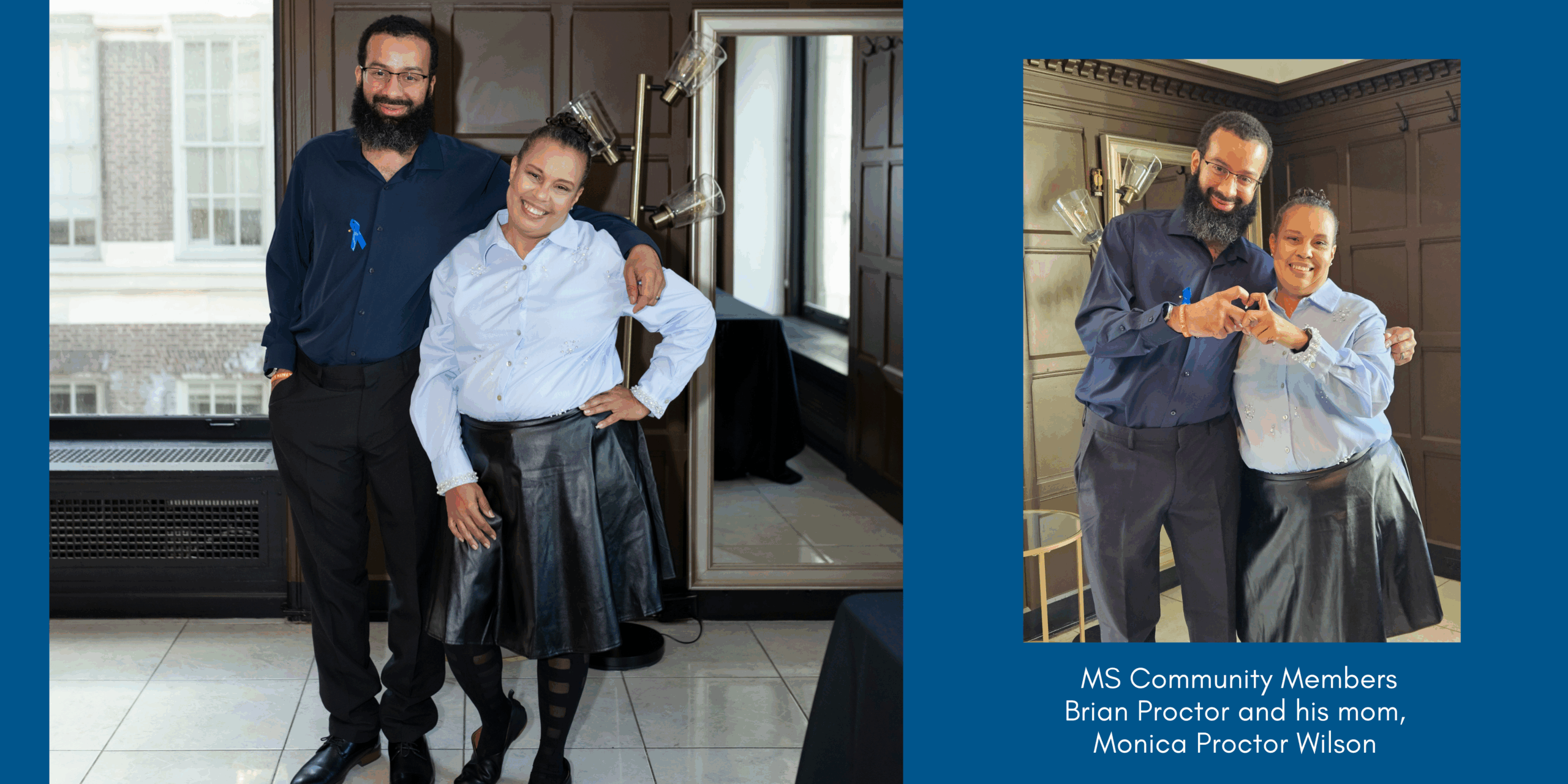
In the spirit of the holiday season, we would like to share the heartfelt story of mother and son, Monica and Brian, who both live with multiple sclerosis.
“I’ve learned that in any situation, if you are not advocating for yourself, you’re not going to get anything. My name is Monica Proctor Wilson, and I was diagnosed with multiple sclerosis on my 40th birthday after spending several years seeking answers to my symptoms. For four or five years, doctors kept saying that it was fatigue, and that I was overworked and needed to take a break. I believed it was multiple sclerosis, and I started asking about it. People would ask me, ‘Why would you want MS?’ I did not want MS. I just wanted to know what was going on with me,” Monica shared.
As I write this on December 1, 2025, my mind turns to the year behind me. The first thought that rises is the people we lost. My mother passed away extremely unexpectedly on June 9. Her absence has sent a wave of grief through me, my wife, my four siblings, and her ten grandchildren. Yet as painful as it has been, I am grateful for what grew out of that difficult season. My brothers and sisters are now closer than we have ever been, and that closeness has carried us forward.
For many people, the holidays are pictured as a “most wonderful time of the year,” filled with parties, gifts, and endless cheer. But for those living with multiple sclerosis (MS), the season often feels different. It can bring a complicated mix of emotions, ranging from genuine gratitude to overwhelming stress. If you find yourself dreading the calendar flip to December, you are not alone. By acknowledging both the darker challenges and the lighter joys, you can find a way to navigate the season that works for you.
Proper sleep is a quintessential part of functioning optimally. The average adult needs at least 7-8 hours of proper sleep. A loss of sleep can interfere with an individual’s ability to function at their full capacity, as it can lead to issues like confusion, irritability, exhaustion, and lack of energy. An individual with MS may often have issues with sleeping soundly. In addition to the general discomfort that they commonly experience, sleep disturbances can create havoc in a person’s body who has this condition.
Here are some tips to keep in mind that might help you get more shuteye when you hit the bed:
Each year, the holiday season is a time of increased tasks, deadlines, and obligations. It can be stressful doing everything I need and want to do. Add managing my health issues with multiple sclerosis, and it can get overwhelming. I’d love it if the satisfaction of nurturing my health and sanity was enough to maintain healthy habits as its own reward, but it hasn’t been. Temptation abounds, and denying myself can feel punishing at times. I strive to enjoy both in healthy doses.
Over the years, I’ve trimmed down and streamlined seasonal tasks to reduce effort and stress. This year, I want to infuse fun with a Bingo card. By choosing items that support my personal goals and having a deadline to complete them, I’ll be more likely to do them.